



Immigration
8/10/2026

Moving abroad as a family is no longer reserved for executives on assignment. It has become a genuine life project, driven by remote work, the search for a better setting and the desire to give children an international experience. As of 1 January 2026, more than 1.78 million French nationals live abroad, including around 410,000 children and adolescents. Choosing a destination should not, however, be taken lightly, as this choice commits the entire family. Safety, schools, cost of living, work-life balance, proximity to France: here are the countries that best combine these criteria, with a ranking led by a destination still too little known to French families.
Before comparing destinations, a framework needs to be established. A successful family relocation rests on a balance between several factors, whose importance varies according to each person's priorities.
This is often the decisive criterion. Some countries are known for their calm atmosphere, their pace of life and their proximity to nature, all of which carry weight when raising children. The living environment shapes the daily well-being of the whole family.
Leaving with children increases the stakes. Safety in the broad sense, encompassing political stability, low crime levels and the absence of major health risks, becomes an absolute priority for parents.
Schooling is prepared well in advance. Each country has its own system, and they are not all equal in terms of teaching quality or equivalence with the French curriculum. Several options usually coexist: local school, French establishment accredited by the AEFE, international school or distance learning. The French network abroad includes more than 560 accredited establishments worldwide.
A high salary does not always guarantee a good standard of living if everyday expenses and family activities are costly. Conversely, a country where life is affordable may lack infrastructure suited to children. The balance between income and spending remains central.
One does not relocate in order to miss seeing one's children grow up. Working hours, the amount of leave and commuting times determine the time genuinely available for the family. This is today one of the top criteria for expatriate families.
The further away the destination, the harder it is to arrange regular reunions with loved ones. A nearby or partly French-speaking country makes both integration and the maintenance of family ties easier, which reassures parents and children alike.
The quality of care and the family's health coverage must be checked before departure. Taxation, often overlooked in comparisons, also deserves attention: it directly affects purchasing power and the building of family wealth. Some destinations combine quality care with a lighter tax framework.
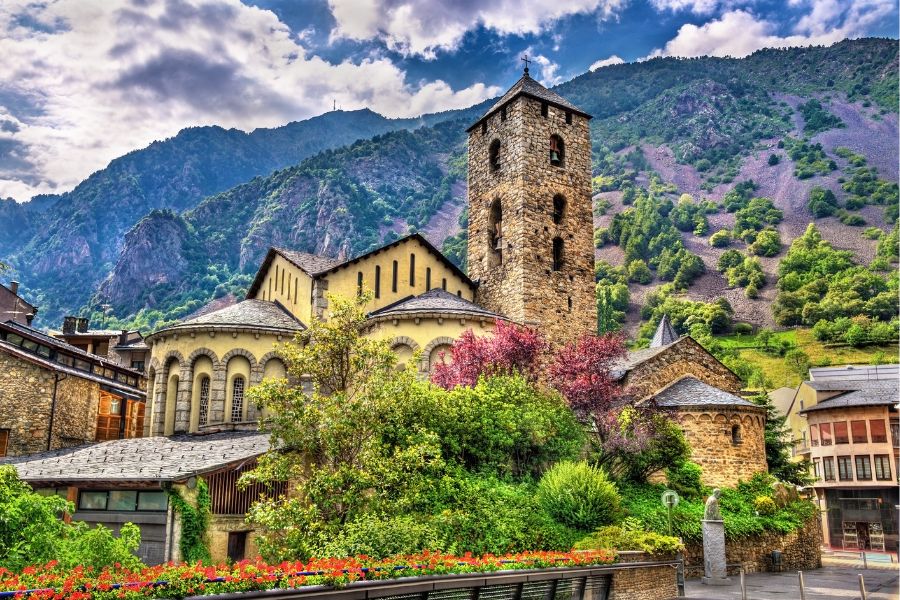
Nestled between France and Spain, Andorra ticks almost every box for a successful family relocation, while remaining a few hours' drive from the south of France. This is what makes it, in our view, the most complete destination for a French family today.
The Principality has one of the highest levels of safety in Europe, with very low crime: a strong argument for raising children with peace of mind. Its human scale creates a reassuring environment, offering the closeness of a village together with the services of a modern country. The mountain setting provides permanent access to nature and outdoor activities, from skiing to hiking, a valuable asset for active families.
As for schooling, Andorra has a rare feature: three education systems coexist, the Andorran, the French and the Spanish, which allows French families to educate their children in a curriculum close to that of mainland France while enjoying a multilingual environment. The official language of Andorra is Catalan, but French and Spanish are also commonly spoken there, which makes everyday integration easier. Families should nonetheless be aware that administration, justice and part of the education system operate in Catalan.
Finally, Andorran taxation, known for its moderation, appeals to families of entrepreneurs and investors seeking to preserve their purchasing power and build wealth. Settling in Andorra does, however, require obtaining an immigration permit. For a family not engaged in salaried work there, residence without gainful activity requires an investment of at least €1,000,000 in Andorran assets (€400,000 if placed in the Housing Fund), together with a non-refundable deposit of €50,000 for the main applicant and €12,000 per dependent. Families who set up their own business in the Principality fall instead under active residence, which is subject to different conditions.
For families able to meet these conditions, the immediate proximity to France, the everyday use of French and the mildness of the tax framework make Andorra a credible alternative to the major European destinations, still little known but particularly well suited to family life.
The Netherlands appeals through its prevailing tolerance, the importance placed on social welfare and a dynamic job market. The balance between work and personal life is highly respected, and the childcare system is particularly well developed for the youngest children. The education system performs well and French schools are numerous. The relatively high cost of living and the damp climate are the main drawbacks.
A safe bet for European families, Spain combines a Mediterranean climate, a well-regarded healthcare system and a more affordable cost of living than in France. Barcelona, Valencia, Malaga and Madrid attract many expatriates thanks to modern infrastructure and a large number of international schools. The relaxed atmosphere and the warmth of the Spanish people make it easier for children to integrate. The trade-off lies in fewer professional opportunities than in other European countries and a command of Spanish often required in order to work.
Partly French-speaking, Switzerland consistently ranks among the best destinations for families. It is valued for its safety, its education system, its natural spaces and its quality of life. Basel has even been singled out as one of the most child-friendly cities in the world. The high cost of living remains the main deterrent, offset by some of the highest salaries in Europe.
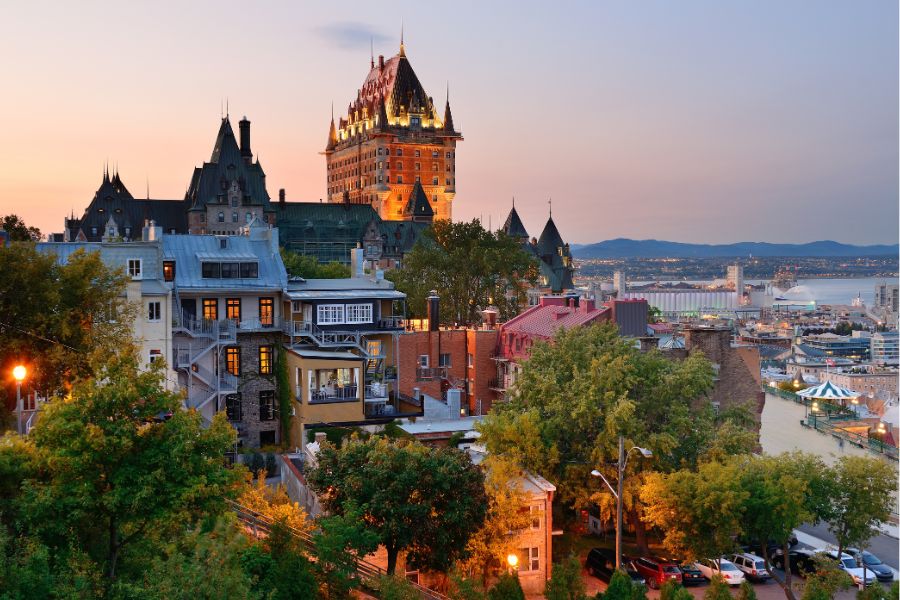
Quebec is the favourite of French-speaking families looking for a North American change of scenery without the language barrier. The country puts children first, with one year of maternity leave that can be shared between parents and a culture renowned as very kid-friendly. The economy is dynamic, salaries are often higher than in France and the education system is recognised worldwide. One must nonetheless contend with long, harsh winters, rising property costs and administrative procedures that can be lengthy.
The countries of northern Europe remain global benchmarks for family life. Favourable family policies, generous leave, safety, access to nature, a quality education and healthcare system: the advantages are many. Finland regularly ranks among the happiest countries in the world. Two reservations, however: learning the language can be difficult, even though English is very widespread, and the cost of living in Scandinavia is becoming a deterrent for many families.
Close to France, Germany offers solid economic prospects, with lower unemployment and generally higher salaries. The education system is free and of a good standard, and most major cities have French schools. German cities, modern, green and safe, often rank among the world's best for quality of life. A command of German remains an asset, and the changeable weather may disappoint those who enjoy the sun.
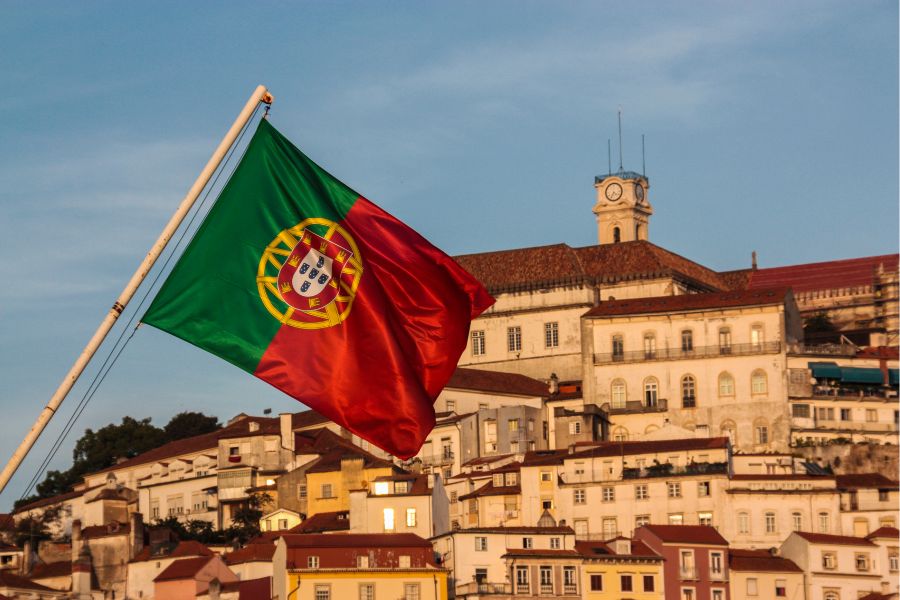
Portugal remains one of the leading destinations for French families. The climate is particularly mild, with more than 300 days of sunshine a year, the level of safety is excellent and the cost of living remains lower than in France in several regions. The school system is of a good standard, French schools are present, and the country offers a specific curriculum to ease the integration of non-native pupils. Lisbon, Porto and the Algarve appeal especially to families working remotely. The only drawbacks: rising rents in major cities and sometimes modest local salaries.
A European outsider, Luxembourg ranks among the countries offering the best quality of life. It appeals through its safety, the quality of its educational offering and high salaries, particularly for qualified profiles in finance, tech and the European institutions. The trade-off lies in significant property costs and a small size that may limit families seeking space.
For families prepared to move farther afield, New Zealand offers a high level of safety, a quality education system and a preserved natural environment. New Zealanders are renowned for their hospitality, which eases integration. The wide open spaces and the relaxed pace of life make it an ideal place to raise children. The high cost of living and above all the geographical distance from France remain the main deterrents.
Family expatriation cannot be improvised. Advance planning largely determines the success of the project and everyone's well-being on arrival.
Changing country is an upheaval for a child: separation from friends, a new language, new points of reference. It is essential to talk with them about the positive aspects as well as the difficulties ahead, and to involve them in organising the move. Finding out about the destination together and letting them choose certain things helps to spark their curiosity and their desire to go.
The choice of establishment depends on the length of the expatriation, the child's age, their level and the family budget. The local school fosters rapid immersion but complicates any eventual return to France. The French establishment guarantees the same programmes and qualifications as in France, but remains fee-paying and much in demand. The international school offers an excellent command of English, at the cost of waiting lists and high fees. Distance learning, through the CNED, complements these options.
Health cover is a point to settle before departure. It must be ensured that all family members are covered from the moment of arrival, both for routine care and for the unexpected. Families generally opt to join the Caisse des Français de l'Étranger or to take out a first-euro policy with a specialist insurer.
Like any move, expatriation requires a precise checklist of the steps to complete before departure and on arrival. Visa applications, when they are necessary, should not be left until the last minute, nor should passport renewals. It is also necessary to gather all the documents relating to the children's records: birth certificates, school reports, health records and medical examinations.
There is no universal ideal age, as each stage has its own advantages and challenges. Early childhood is often the simplest period for relocating: before the age of 6 or 7, children adapt more easily and learn a new language naturally. Between 7 and 10, social ties become more important and the change can be harder to experience. In adolescence, social and identity markers become central, which sometimes makes settling in more difficult. Around 17 or 18, expatriation often accompanies a transition toward independence, and young expatriates develop a sought-after international profile.
Families' motivations are changing. The priority is no longer a high salary but the possibility of living better, more serenely, with more time for loved ones. Remote work and international careers are reshuffling the deck and favour destinations that offer a good quality of life at a controlled cost. Nearby European countries, such as Portugal, Spain and Andorra, stand out thanks to their balance of proximity, security, climate and taxation. More distant destinations retain their appeal for families seeking a change of scenery, but distance and the cost of living weigh increasingly heavily in the decision. The underlying trend is clear: family expatriation is becoming a way to regain control over one's quality of life and over one's children's future.
There is no perfect destination, but rather one suited to your situation, your priorities and those of your children. Security, proximity, the everyday use of French, quality of life and low taxation place Andorra at the top for many French families, provided the residence conditions can be met, without ruling out other options depending on your desire for a change of scenery or your professional constraints. Whatever country you choose, a well-prepared project and suitable support make all the difference between an expatriation endured and a successful family adventure.
