


Finance
July 30, 2026

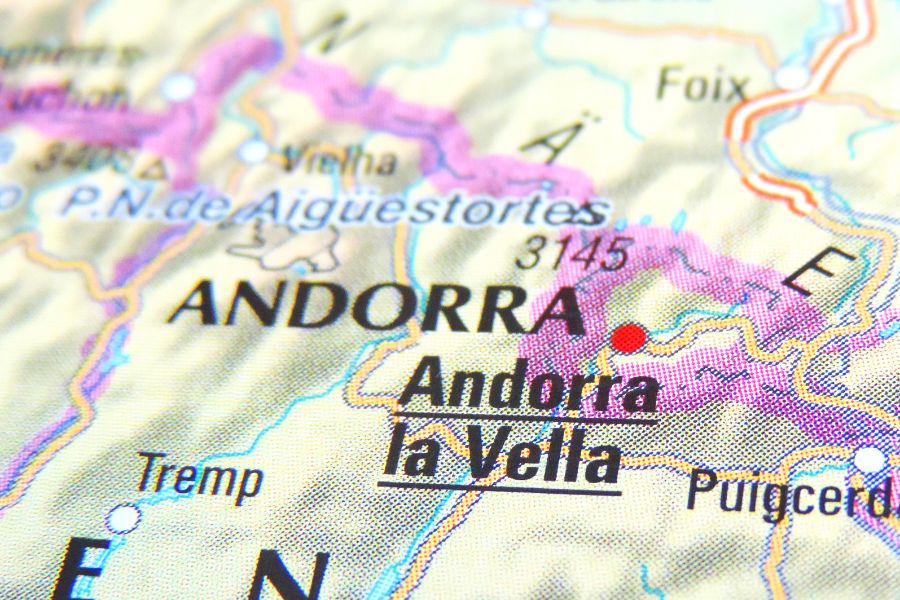
Every year, Andorra attracts more French-speaking entrepreneurs, consultants, and employees drawn to its tax system, safety, and quality of life. Among the various residency statuses, active residency is the most common route for settling permanently in the principality and pursuing a professional activity there, as opposed to passive residency, which is reserved for individuals with significant capital who do not engage in economic activity in the country. In this article, we will detail the eligibility requirements, the application process, the actual cost of this status, its tax implications, and how it differs from passive residency.
Active residency refers to the status granted to individuals who are actually engaged in professional activity within Andorran territory and reside there permanently, as opposed to passive residency, which allows individuals to live in Andorra without working there in exchange for a substantial financial investment. It covers two situations: active residence as an employee, for individuals with an employment contract with an Andorran company, and active residence as a self-employed individual, intended for entrepreneurs and independent professionals who run their own businesses. The latter category accounts for the majority of applications, particularly among content creators, consultants, traders, and digital professionals who have neither a job offer nor the capital required for Andorran passive residence.
Active salaried residency applies to individuals hired by an Andorran company under an employment contract. This is the simplest route from an administrative standpoint, as part of the process falls to the employer, who registers the employee with the Caixa Andorrana de Seguretat Social (CASS) upon starting the job, with contributions shared between both parties. The applicant must establish permanent residence in Andorra and provide identification documents, a criminal record check, proof of housing, and a civil status certificate. This status, which is less expensive than self-employed residency since it requires neither the formation of a company nor the posting of a security deposit, is contingent upon first obtaining an employment contract.

Active residency for entrepreneurs, sometimes referred to as self-employed residency, is the preferred route for entrepreneurs who are starting or acquiring an Andorran business. The applicant must hold more than 34% of the company’s share capital—a threshold set by Law 2/2026 amending the Qualified Immigration Law 9/2012—and hold a position on the company’s board of directors. Actual residence for at least 183 days per year is also required, as well as contributions to the CASS as a self-employed individual and proof of housing.
The most fundamental requirement remains the payment of €50,000 to the Andorran Financial Authority (AFA). Under Llei 2/2026, this deposit is final and non-refundable, except in the event that the initial authorization is denied; previously, it could be refunded if the individual left the country. An exemption applies to companies operating in the digital economy, innovation, or high-value-added technology entrepreneurship, as well as to projects selected by an entity previously recognized by the Andorran government for this purpose. This qualification is not automatic and is subject to criteria defined by regulation.
The process for obtaining a work permit for self-employed individuals has followed a structured path since the 2026 reform. The first step is to reserve an immigration authorization with the Servei d'Immigració, a mandatory prerequisite before beginning the process of starting a business or obtaining recognition as a qualified professional. This reservation establishes a specific timeframe for finalizing the application: three months for qualified professionals and six months for entrepreneurs. Once this period has elapsed, the reservation is canceled.
Next comes the incorporation of the company, followed by obtaining foreign investment authorization, and then submitting the complete application package: an apostilled or legalized passport, a criminal record, a resume, proof of residence, a civil status certificate, and consent to medical examinations. This is followed by the payment of the deposit to the AFA and registration with the CASS. Once authorization is granted, the applicant must register with the Comú of the parish of residence within three months and provide proof that the company has a duly registered business that is actively operating.


One of the main attractions of active residency is Andorra’s tax system, which is significantly less burdensome than that of France or Spain. An active resident becomes an Andorran tax resident as long as they stay in the country for more than 183 days a year. Personal income tax (IRPF) is based on a progressive three-bracket scale: exemption up to €24,000, a 5% rate between €24,001 and €40,000, and a 10% rate above that amount, which is the maximum IRPF rate. Dividends paid by an Andorran company to an Andorran tax resident are also exempt from IRPF under the standard tax regime. For entrepreneurs, the corporate income tax (IS) rate is 10%, which is significantly lower than the rates in France or Spain.
For active residents of French nationality, the tax treaty between France and Andorra prevents double taxation on the same income by allocating the right to tax between the two countries based on the nature of the income received. It also imposes specific reporting requirements in France for individuals who have transferred their tax residence to Andorra, particularly during the first few years following their move. A personalized analysis is recommended before any transfer, as the rules vary significantly depending on the applicant’s professional and financial profile.
Active residency offers several concrete advantages: a personal income tax rate capped at 10% and a corporate income tax rate of 10%—rates significantly lower than those in most neighboring countries—as well as recognized health and retirement coverage through the CASS, with coordination agreements in place with the French and Spanish systems. Family reunification is another advantage: in accordance with Law 9/2012, the granting of family reunification permits is not subject to any nationality requirements and cannot be denied due to quota limitations. The quality of life and proximity to Toulouse, Spain, and the Pyrenees also attract many applicants.
The choice between active residency and passive residency depends on the applicant's life plans and financial situation.
Active residency is the best option for those seeking to engage in actual professional activity in Andorra without requiring a very large amount of capital, whereas passive residency is better suited to individuals with substantial assets who do not wish to work or run a business in the country.
The overall cost of active residency varies depending on the option chosen. For an employment contract, the costs are limited to personal administrative procedures, and no deposit is required from the employee. For self-employment residency, the cost is broken down into several components.
The CASS contribution for a self-employed individual is not a fixed amount: it depends on the average Andorran salary from the previous year and the chosen bracket, ranging from 25% to 137.5% of that base. For a full contribution, the amount is typically between €500 and €590 per month, but an entrepreneur starting a business may, under certain conditions, opt for a reduced base in the first year.
The initial residence permit for self-employed individuals is issued for a period of one year, renewable three times for two-year periods, and then for ten-year periods after the first seven years, unless otherwise specified by a bilateral agreement. Maintenance of this status is contingent upon two cumulative requirements: actual residence for 183 days per year, which the authorities may verify at the time of renewal, and proof of the company’s actual economic activity. If renewal is denied twice, the holder may not submit a new application for a period of twelve months. This same waiting period applies if an application in progress is withdrawn, or if the holder requests voluntary deregistration from the Principality (baixa voluntaria del Principat).
Several mistakes are commonly made by applicants for active residency. The first is underestimating the requirement for genuine economic activity: a company with no registered business or actual operations exposes its director to a denial of renewal. The second concerns the timeline for the preliminary reservation, for which the three- or six-month deadlines are strict. The third is neglecting the reporting obligations that remain in the country of origin after transferring tax residency to Andorra. Finally, relying on unqualified advisors to set up a company exposes you to legal and tax risks.
Active residency remains the most common route to living and working legally, whether obtained through an employment contract or by establishing a company in Andorra. While the requirements have become stricter following recent reforms—notably the fact that the €50,000 deposit for self-employed individuals is now permanent—this status still offers significant advantages: controlled taxation, recognized social security coverage, and simplified family reunification. Personalized guidance helps you plan ahead and avoid the most costly mistakes.
