



Immigration
15/10/2026

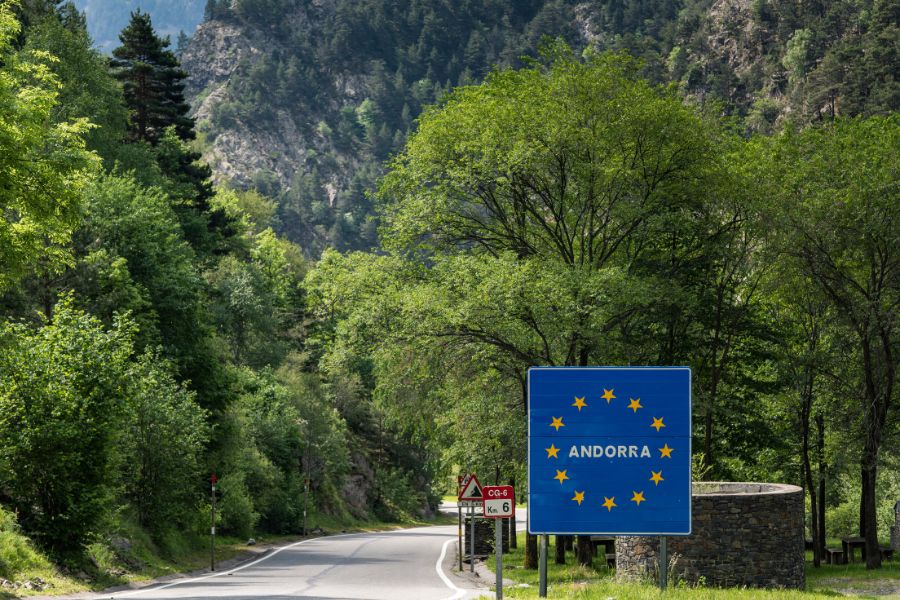
Every year, Andorra attracts more expatriates seeking favorable tax conditions, an exceptional quality of life, and an unspoiled mountain setting. But living in Andorra and becoming an Andorran citizen are two very different things. Residency allows you to enjoy tax benefits starting in the first year. Citizenship, on the other hand, is a long-term commitment subject to strict conditions that Andorra deliberately maintains to preserve the identity of this microstate with fewer than 80,000 inhabitants. Here is everything you need to know before embarking on this process.
Andorran tax residency is a legal prerequisite for any application for naturalization: one cannot apply for citizenship without first establishing residency in the country. However, the reverse is not true. An expatriate can certainly reside in Andorra, enjoy an income tax rate capped at 10% and the absence of inheritance tax, without ever applying for Andorran citizenship.
Citizenship goes beyond that: it grants political rights, an Andorran passport, and a full sense of belonging to the Principality. It is a life choice, not merely a matter of administrative convenience.
There is no single way to become an Andorran citizen. The law provides for several pathways, each with its own requirements and timeframes.
This is the standard procedure for any foreign adult wishing to acquire Andorran citizenship. It requires 20 years of primary and permanent residence in the country, with documentation covering the entire period.
There is an exception: if the applicant has completed all of their compulsory education in Andorran educational institutions—that is, including all subjects specific to the Andorran curriculum—the residency requirement is reduced to 10 years.
Marriage to an Andorran national offers a much faster route: three years of primary and permanent residence are sufficient, whether this period precedes or follows the marriage. This is the quickest path for an adult expatriate wishing to become an Andorran citizen.
Two important points to note: the spouses must still be living together at the time the application is filed, and a serious criminal conviction may prevent naturalization.
There are several situations in which Andorran citizenship is granted automatically at birth or through a simplified process:
💡 Good to know: Andorra does not distinguish between biological parentage and adoption. An adopted child is subject to the same rules as a biological child.
A child under the age of 14 who is adopted by an Andorran national acquires Andorran nationality. If the adoptive parent is a foreign national but has resided in Andorra for at least 10 years as of the date of adoption, the child is also eligible. If this requirement is not met, a temporary passport is issued pending fulfillment of the 10-year residency requirement.
Regardless of the path chosen, all applicants must meet a set of common requirements:


This is one of the requirements that international applicants least expect. To obtain permanent Andorran citizenship, all naturalized citizens must pass an official exam covering three areas: the Catalan language (the Principality’s official language), the history of Andorra, and its geography. This exam is administered by the Nationality Commission.
Applicants have five years—the same timeframe as that allowed for renouncing their former nationality—to take this exam. While this timeframe may seem ample, it is best to begin learning Catalan as soon as you start planning to move to Andorra. Andorran citizenship is a commitment to the country’s identity, and the exam is a concrete expression of that commitment.
Compiling the application is a critical step. All foreign documents must be apostilled and, if necessary, translated into Catalan by a certified translator. The documents generally required are as follows:
The entire application must be written in Catalan. Allow sufficient time to gather and have all these documents certified, especially those from abroad.
Once the application is complete, the process follows a specific sequence:
Processing times vary depending on how complete the application is. A well-prepared application, with no missing documents or translation errors, significantly reduces the processing time.
For a French expatriate, renouncing French citizenship is the decision with the most far-reaching consequences in this process. It does not take effect immediately—the five-year waiting period allows time to prepare—but it deserves careful consideration in advance.
In practical terms, renouncing French citizenship entails, among other things: the loss of French consular protection abroad, potential impacts on certain regulated professional statuses in France, and consequences regarding the cross-border inheritance rules applicable to one’s estate.
During the five-year waiting period, the prospective Andorran citizen technically retains their French nationality. This is the time to consult a specialized attorney to accurately assess the implications based on their personal and financial circumstances.
Andorran citizens may vote in elections and hold public office within the Principality. This constitutes full and equal participation in the civic life of a sovereign state.
Andorran citizenship grants full access to the Principality’s public services: healthcare, education, and social security through the CASS (Andorran Social Security Fund).
Andorra levies an income tax capped at 10%, a corporate tax of 10%, and imposes neither inheritance tax on transfers between relatives nor a wealth tax. For a tax expatriate, citizenship solidifies a connection to the Principality that goes beyond mere resident status.
Although Andorra is not a member of the European Union or the Schengen Area, its bilateral agreements with Spain and France allow for free movement across land borders without systematic checks. The Andorran passport also provides easier access to many countries under bilateral cooperation agreements.
Low crime rates, a trilingual education system, an exceptional natural environment, and high-quality public services: the Principality is regularly ranked among the regions offering the best quality of life in Europe.
| Access route | Main condition | Minimum time limit |
|---|---|---|
| Standard naturalization | 20 years of residency | 20 years |
| Education in Andorra | 10 years of residency + full tuition coverage | 10 years |
| Marriage to an Andorran | 3 years of residency + living together | 3 years |
| Parentage (Andorran parent) | Birth in Andorra + parent's residence | at birth |
| Andorran grandparents | 15 years of residency | 15 years |
| Adoption | Before the age of 14 + Andorran parent or 10 years of residence | variable |
Andorran tax residency is sufficient to qualify for the Principality’s tax benefits starting in the first year. Citizenship is an additional, more demanding step that is not required of all expatriates.
For an expatriate seeking primarily to optimize their tax situation, active or passive residency in Andorra is a quick option that does not require renouncing one’s original nationality. For an entrepreneur or a family settled there long-term, with children attending school in Andorra and wishing to get involved in local life, naturalization becomes a logical option to consider for the long term.
In any case, this decision warrants specialized guidance: the legal, tax, and personal implications vary significantly from one situation to another.
📌 Legal basis: This article is based on the Qualified Nationality Act (1996, consolidated), its subsequent amendments, and the Regulation on the Assessment of Sufficient Integration in Andorra (May 3, 1996). Individual circumstances may vary; it is recommended that you seek professional guidance.
