


Finance
July 30, 2026

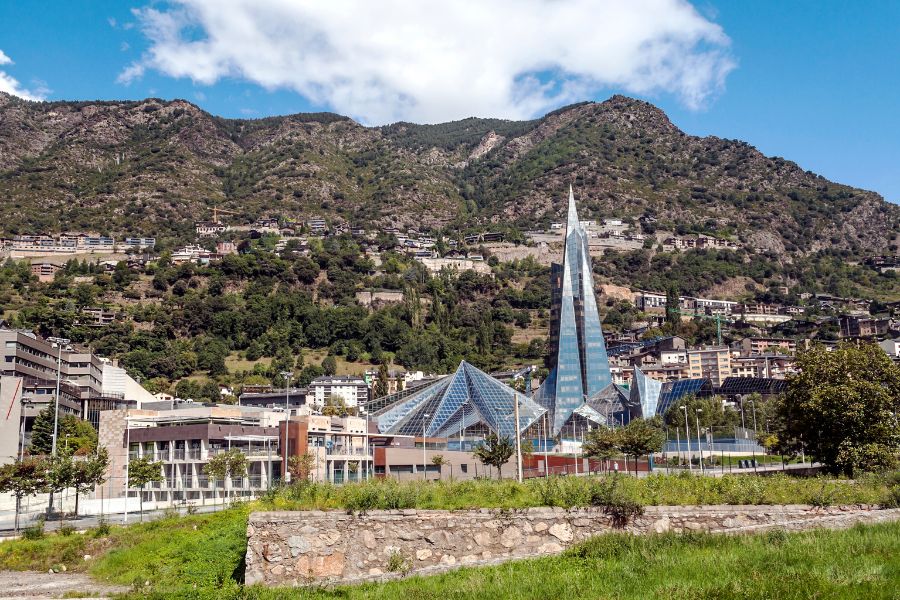
Registering a company in Andorra means establishing its registered office there. The principality attracts more and more French and European entrepreneurs every year, but the process is often misunderstood. Many confuse company registration with tax residency, or overestimate the actual tax savings for a company executive who remains a resident of France. This guide details the exact steps involved, the costs to expect, and the prerequisites.
A registered address is the address of a company’s headquarters. In Andorra, this address must be a real and verifiable location: a commercial space, an office, or a space within a business center. P.O. boxes are not sufficient, and the authorities regularly verify that the business is actually operating.
Registering a company in Andorra does not automatically make you an Andorran tax resident. These are two distinct systems. You can certainly register an Andorran company while remaining a tax resident of France. This distinction determines everything else, particularly effective tax planning, which is discussed below.
Would you like to learn more about residency requirements in Andorra? Check out our article on the topic!
Andorran corporate income tax is capped at 10% and applies to the very first euro of profit, with no exemption threshold. This is significantly lower than France’s standard rate of 25%. Certain special tax regimes, notably the one for intangible assets (patents, software), allow for an 80% reduction in the taxable base for the relevant income, resulting in an effective tax rate of 2%, subject to prior authorization and substantial economic activity in Andorra.
Andorran VAT, known as IGI, is 4.5%, the lowest rate in Western Europe. There is no wealth tax, no significant inheritance tax, and no exit tax under Andorran law. However, a French entrepreneur who transfers their tax residence to Andorra remains subject to the French exit tax on their unrealized capital gains at the time of departure. The France-Andorra tax treaty, in effect since 2015, eliminates double taxation and regulates the flow of funds between the two countries, with a 5% withholding tax for companies that directly hold at least 10% of the capital, and a 15% withholding tax in all other cases, including individuals.
These benefits are real at the societal level. How they play out on a personal level depends entirely on your residency status—a point that is all too often overlooked.


Two legal structures account for virtually all business formations by non-residents. The limited company (SL), equivalent to the French SARL, requires a minimum share capital of 3,000 euros, which must be fully paid in at the time of incorporation. A sole entrepreneur may form an SLU (single-member limited company).
A public limited company (SA) is suitable for more structured projects involving multiple shareholders or planned fundraising. It requires a minimum share capital of 60,000 euros. A single-member version, the SAU, also exists.
Are you interested in starting a business? Check out our article on starting a company in Andorra.
For non-residents, it generally takes 3 to 4 months from the time the application is submitted until the bank account is actually opened. Here are the steps and procedures:
The name reservation with the Andorran Companies Registry is valid for three months and takes a few days to process. In the meantime, gather the articles of incorporation, identification of the beneficial owners, an apostilled criminal record, and a business plan describing the proposed business activity.
Any non-resident holding more than 10% of the capital of an Andorran company must obtain prior authorization from the government, issued by the Autoritat Financera Andorrana (AFA). The application must include information on the source of funds, the profile of the beneficial owners, and the business plan. The processing time ranges from 4 to 8 weeks depending on the complexity of the application, and can sometimes take up to three months. The cost of this authorization is approximately 1,500 euros, which is non-refundable in the event of a denial.

The share capital must be deposited in an Andorran bank account before the articles of incorporation—drafted in Catalan—are signed before a local notary. This bank deposit process takes 2 to 4 weeks for a non-resident and can be completed in advance while the AFA application is being processed.
After the notarized deed is executed, the company is registered in the commercial register and published in the BOPA (Andorran Official Gazette), which marks its legal existence. The NRT (tax registration number), equivalent to the French SIRET, is assigned within 2 to 4 weeks. The company can issue invoices and begin fulfilling its accounting obligations using this number.
The final step, which is often the longest. Andorran banks (MoraBanc, Andbank, Crèdit Andorrà, BancSabadell d'Andorra) enforce strict KYC compliance. Allow an additional 2 to 4 weeks if the application is complete; it may take longer if your profile is deemed sensitive.
This is the point that is most often overlooked! If the executive does not reside in Andorra, the company must employ at least one employee registered with the Caixa Andorrana de Seguretat Social (CASS), under a valid employment contract. The company must also have a physically designated workspace with an electricity meter registered in the company’s name. Andorran authorities conduct inspections to verify that the business is actually operating.
Without this economic substance, authorization for foreign investment may be denied, and the French tax authorities may themselves reclassify the company as being managed from France, with serious tax consequences.
Banks require certified articles of incorporation, publication in the BOPA, AFA authorization, the identities of all beneficial owners, the source of funds over a period of twelve to twenty-four months, and a coherent business plan. They ask specific questions about customers, suppliers, and countries of operation. An incomplete application or evasive answers will result in a rejection, without any obligation to provide a reason.
This is a point that is often misunderstood. Incorporating a company in Andorra while remaining a tax resident in France provides a real but limited advantage, not a total exemption.
From a corporate perspective, the difference between Andorra’s 10% corporate income tax rate and France’s 25% rate represents a net gain for the company’s capitalization. On 100,000 euros in profits, an Andorran company retains 90,000 euros, compared to 75,000 euros for its French counterpart. However, as soon as these profits are distributed to a shareholder who is a French tax resident, they are subject to a single flat-rate withholding tax of 30% (income tax and social security contributions), exactly like dividends of French origin. The advantage is then reduced to the initial corporate income tax difference, or approximately 63,000 euros net for the Andorran company versus 52,500 euros for the French one—a real gain of about 20%, but far from the total exemption sometimes promised.
Full optimization—with tax-exempt dividends upon withdrawal—requires transferring one’s tax residence to Andorra, which means becoming an Andorran tax resident. Without this transfer, the French tax authorities may also challenge the arrangement if the company’s effective management is exercised from France: Article 209 B of the General Tax Code then allows Andorran profits to be taxed as if they were French, with penalties of up to 80% of the evaded taxes in cases of clear abuse of rights. The “substance” described above—an employee, an office, and effective on-site management—is therefore not merely an administrative formality; it is what protects the arrangement from reclassification.
In addition, all French residents must report their Andorran bank accounts to the DGFIP (Form 3916), or face penalties.
If you'd like to learn more about these topics, check out our article ontax expatriation in Andorra.
For an SL registered by a non-resident: 3,000 euros in share capital to be set aside, AFA authorization fee of approximately 1,500 euros, notary and registry fees of approximately 1,000 euros, and business center registration fee of 360 to 1,200 euros per year. In addition, there are costs for an Andorran accountant (2,000 to 5,000 euros per year) and, if applicable, the Andorran minimum wage for a local employee, including social security contributions (approximately 22% shared between employer and employee).
Excluding mandatory salary costs, the first-year budget ranges from 5,000 to 10,000 euros for a simple organization with no substantial on-site operations. With one employee and dedicated office space, the annual cost often exceeds 25,000 euros.
Choosing a fictitious address with no operational reality will result in immediate rejection by the AFA and banks. Omitting a beneficial owner from the application automatically halts the process. Many entrepreneurs also overlook the requirement to hire a local employee if the CEO does not reside on-site, which invalidates the required economic substance. Finally, failing to meet French reporting obligations—while maintaining tax residency in France—can result in a tax assessment that is far more costly than the anticipated tax savings.
Incorporating a company in Andorra truly benefits entrepreneurs who are prepared to meet the requirements regarding substance, an office, employees, and effective on-site management—not those who are simply looking for a mailing address. The tax savings at the corporate level are significant, but full tax optimization is only achieved through an actual transfer of residence. Before proceeding, have your specific situation assessed, including your actual budget, the required substance, and the impact on your personal taxes in France.
Our advisors will analyze your project and provide you with a transparent assessment of whether domiciliation alone is a viable option or whether Andorran tax residency is necessary to achieve your goals. Contact us for a personalized assessment.
