

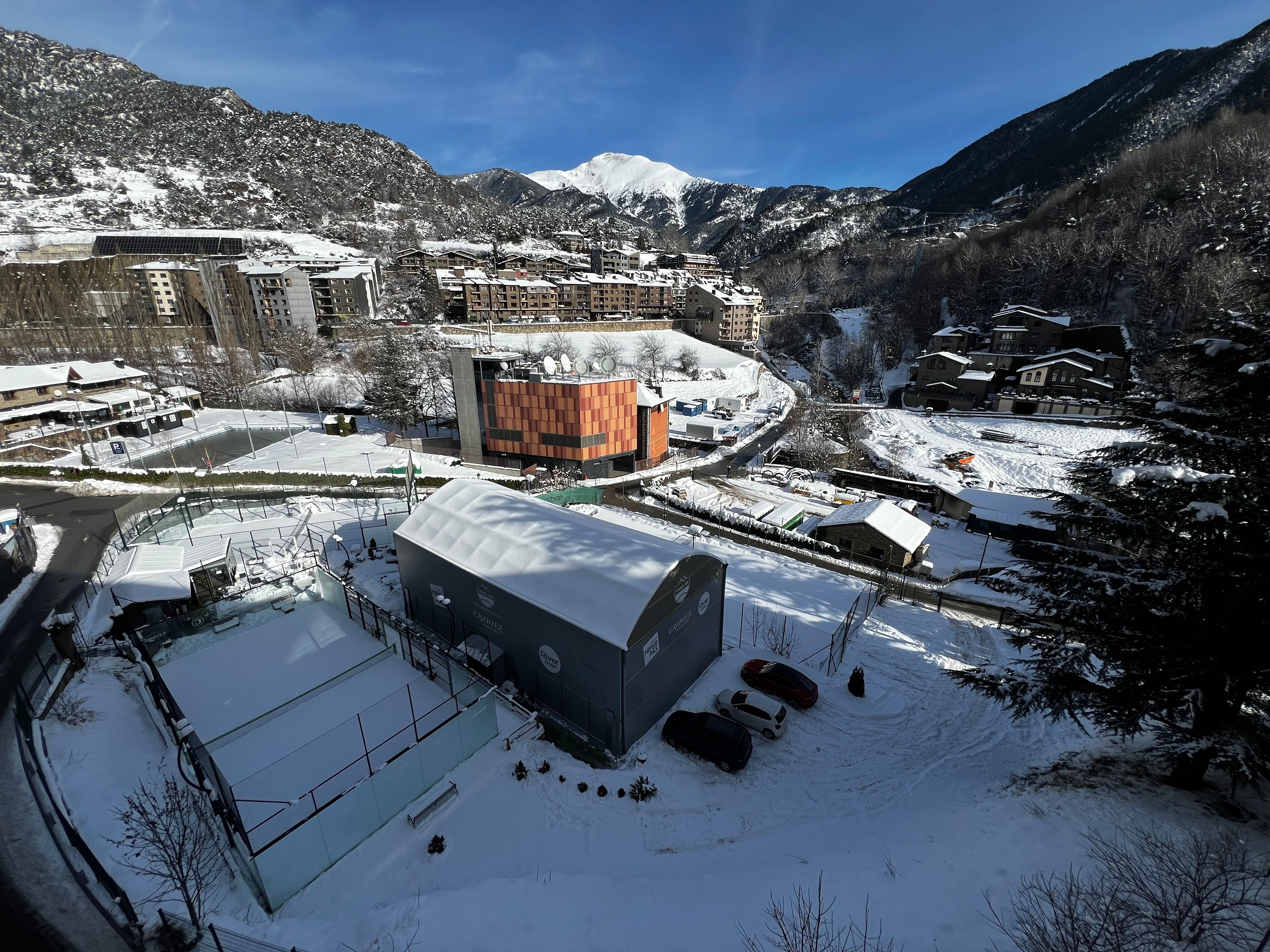

Setting Up a Branch in Andorra: Requirements, Benefits, and Procedures
The Complete Guide to Setting Up Your Business in the Principality in 2026
Key points: Andorra’s corporate income tax is capped at 10% (reducible to as low as 2% for certain innovation and intangible asset management activities), the IGI at 4.5%, and total social security contributions at 21.5%. Andorra is not on the European Union’s blacklist of tax havens and adheres to the OECD’s transparency standards.
For a growing number of European entrepreneurs and corporate groups, establishing a branch in Andorra has become a strategic decision rather than a mere optimization measure. The Principality combines some of the lowest tax rates in Europe, a central location on the continent between France and Spain, and fully recognized international compliance. This guide details the concrete benefits, the applicable tax regime, the available legal structures, and the exact procedure for successfully establishing your business.
Your expansion project deserves a customized analysis
Appropriate structure, tax matters, banking compliance, residency status: every project is different. Our experts guide your establishment in Andorra and ensure every step is handled properly.
Get a cost estimate for my site development project, compared to 25% in France and Spain
s in Europe
6% employee's share
, or direct inheritance
Why Setting Up a Branch in Andorra Attracts Entrepreneurs
The Principality of Andorra is attracting a growing number of foreign investors who are determined to structure part of their business outside their home country. Establishing a branch office allows a company to expand its existing operations while benefiting from a stable tax and economic environment, without having to create an entirely separate legal entity. This 468-square-kilometer territory, nestled in the Pyrenees, offers a number of advantages.
- A competitive tax system, with a corporate income tax capped at 10% and a local VAT (IGI) of 4.5%, among the lowest in Europe.
- A strategic location between France and Spain, just a few hours' drive from Toulouse or Barcelona.
- A safe living environment, with one of the lowest crime rates on the continent.
- Modern infrastructure: fiber-optic coverage throughout the region and a high-performance telecommunications network.
- A dynamic entrepreneurial ecosystem, supported by Andorra Business, the official economic development agency that assists foreign investors.
Attractiveness is not limited to taxation. The Principality is focusing on growth sectors such as digital technology, healthcare, tourism, and financial services, with active institutional support for project developers. This diversification reassures entrepreneurs who are looking for a sustainable location, rather than a temporary tax advantage.
International credibility: Andorra is not on the European Union’s blacklist of tax havens. The country adheres to OECD transparency standards and has signed numerous agreements on the automatic exchange of tax information, which makes establishing a business there a secure option in the eyes of European authorities.
The Practical Benefits of an Andorran Branch Office
Beyond the overall tax burden, three specific factors influence the decision to establish a branch: direct and indirect tax burdens, the physical environment, and labor costs.
A simple and transparent tax system
Andorra has some of the lowest direct and indirect tax rates in Europe. The corporate income tax is capped at 10% of profits, and the IGI—the equivalent of VAT—stands at 4.5%. This combination allows for perfectly legal tax optimization without resorting to opaque arrangements. It is accompanied by notable exemptions that further reduce the overall tax burden.
- There is no property wealth tax, unlike in France.
- No inheritance or gift taxes apply to transfers between family members.
- Tax Exemption for Dividends Received by a Resident Beneficiary, Subject to Ownership Requirements.
Connectivity, Infrastructure, and Quality of Life
The Principality combines modern infrastructure with a central location between two major European markets. The region benefits from comprehensive fiber-optic coverage, ideal for digital activities, and is located about two hours from Barcelona and three hours from Toulouse. In addition to these technical advantages, the area offers a quality of life that is a major factor in the decision to relocate abroad: a high quality of life in a mountainous setting, a healthcare system consistently ranked among the best, safety, and vast natural spaces.
Reduced social security contributions
Labor costs remain moderate thanks to lower social security contributions. Both employers and employees pay significantly lower contributions than those in France or Spain, which directly improves the profitability of a branch that employs local staff. Here are the rates applicable to the CASS, Andorra’s social security fund.
- Employer contributions: 15.5% of gross pay.
- Employee contributions: 6% of gross pay.
- This amounts to a total social security contribution rate of 21.5%, compared with more than 60% in some neighboring countries.
What tax regime applies to an Andorran branch?
An Andorran branch is subject to the same tax regime as local companies, with a corporate income tax capped at 10%. The IGI is levied at 4.5% on transactions, while taxation of individuals remains capped at 10%. This transparent framework makes it easier to estimate tax liabilities before establishing a presence in the country.
Major Taxes and Their Rates
- Corporate income tax (CIT): 10% of profits, reducible to 2% for certain innovative activities or those involving the management of intangible assets.
- IGI (equivalent to VAT): 4.5% on most goods and services, one of the lowest rates in Europe.
- IRPF (personal income tax): 10% maximum, with a tax-exempt bracket up to a certain income threshold.
- IRNR (Income of Non-Tax Residents): A maximum of 10% on income from Andorran sources.
Wealth Transfer: Dividends distributed by an Andorran company are tax-exempt for resident beneficiaries, subject to certain ownership requirements. Combined with the absence of inheritance and gift taxes for direct descendants, this rule makes Andorra an attractive jurisdiction for transferring and growing wealth.
Andorra vs. France and Spain
The numbers speak louder than words. Comparing Andorra to its two neighbors reveals differences amounting to tens of points.
| Withdrawal | ★ Andorra | France | Spain |
|---|---|---|---|
| Corporate tax | 10 % | 25 % | 25 % |
| VAT / GST | 4,5 % | 20 % | 21 % |
| Inheritance Tax (Immediate Family) | 0 % | up to 60% | up to 34% |
| Wealth tax | None | IFI up to 1.5% | up to 3.5% |
| Total Social Security Contributions | 21,5 % | more than 60% | about 37% |
These differences are not insignificant. For corporate income tax purposes, a profit of 500,000 euros results in a tax liability of 50,000 euros in Andorra, compared to 125,000 euros in France. The difference of 75,000 euros represents a sum that can be reinvested each year. Indirect taxes further amplify this advantage: a 4.5% VAT rate, compared to 20%, lowers the final price of goods and services and enhances the commercial competitiveness of an Andorran branch.
A simple benchmark: a 10% corporate tax rate, compared with 25% in France, reduces the tax burden on profits by a factor of 2.5. Over time, this difference becomes a decisive competitive advantage for financing growth.
Special Tax Regimes and Double Taxation
Andorra offers tax regimes tailored to the nature of the business. Holding companies with equity interests are eligible for exemptions on income from foreign subsidiaries, subject to certain ownership requirements. Businesses involved in digital assets and the management of intangible assets may benefit from a reduced tax rate of 2%. The Principality has also developed a network of treaties designed to prevent the same income from being taxed twice: the double taxation treaty with France entered into force in 2016, securing the flow of funds between the two countries. In addition, there are bilateral treaties with Spain, Portugal, Luxembourg, and other countries, social security agreements, and a customs agreement with the European Union.
What legal structure should you choose when setting up a business?
The choice of structure determines the capital required, the liability incurred, and the wealth management strategy. A branch is often organized under one of these forms, depending on the chosen business model.
S.A. (Societat Anònima)
Minimum capital of 60,000 euros. Suitable for large companies and projects requiring significant capital or open to investors.
S.L. (Societat Limitada)
Minimum capital of 3,000 euros. Preferred by small and medium-sized enterprises for its flexibility and limited liability to the amount of capital contributed.
Holding Company
A holding company structure designed for holding equity interests, wealth planning, and the legal protection of assets.
Commercial Company
A traditional business structure for conducting trading, service, or distribution activities within the territory.
The choice depends primarily on the scale of your business. A project with high revenue or one open to investors warrants a public limited company (S.A.), while a medium-sized business is perfectly suited to a limited liability company (S.L.). For a strategy focused on the transfer and protection of assets, a holding company is the best option: it centralizes equity interests and benefits from the tax exemptions on income from foreign subsidiaries mentioned above. The requirements for incorporation and capital are detailed by the Andorra Chamber of Commerce, Industry, and Services, the leading institutional source of information.
Case Study: Sébastien's Andorran Branch
A French software company is expanding its operations in the Principality
From Montpellier, Sébastien runs a fast-growing software publishing company, a significant portion of whose revenue comes from international clients. Faced with a 25% corporate income tax rate and high social security contributions, he wants to establish a branch in Andorra to house his digital asset licensing and management business, without immediately transferring his personal residence there.
Following an audit of its organizational structure, Engage established the framework for transferring the intangible assets business to the Andorran branch, prepared the foreign investment application, and coordinated the opening of a bank account and the deposit of capital. The double taxation treaty between France and Andorra ensured the smooth flow of funds between the parent company and the branch.
The tax differential funded a full year of hiring. But what really convinced me was the legal certainty: everything is compliant, properly reported, and enforceable against French government agencies.
This is a fictional, illustrative case. Each financial and corporate situation requires a case-by-case analysis, particularly with regard to eligibility for the reduced rate and whether the required economic substance is actually present.
Procedures for Establishing a Branch in Andorra
Setting up a branch office involves a well-defined administrative process, from filing the foreign investment application to final registration. You do not need to be a resident of Andorra to initiate the process: a local representative can handle most of the formalities on your behalf.
Application for Foreign Investment Authorization
Submit the application to the Andorran government—the first mandatory step for any non-resident investor looking to establish a business there.
Administrative permit specific to the activity
Obtain the license corresponding to the branch’s business activities, consistent with its corporate purpose.
Preparing the Documentation
Gather the digital certificate and the parent company's documents—legalized and apostilled—ready to be submitted to the authorities.
Submission of the official form
Make an appointment and submit the form to the appropriate administrative office, along with all the required documents.
Signatures of Non-Resident Shareholders
Obtain the signatures of non-resident shareholders who hold more than 10% of the parent company's capital.
Evaluation and Authorization
Monitor the administrative review process until you receive notification of approval. On average, it takes 4 to 8 weeks from the submission of a complete application to final approval, depending on the business activity.
Once approval is obtained, the capital is deposited with an Andorran bank, which issues a certificate that is required for final registration. The local banking system therefore serves as a mandatory step prior to registration.
Mistakes to Avoid
Neglecting the actual economic substance
A branch office with no actual business activity or on-site resources is at risk of being reclassified by the authorities of the home country. The substance (offices, staff, decisions made locally) must be genuine and documented.
Underestimating the Importance of Document Legalization
A document from the parent company that is not properly legalized or does not have an apostille is enough to delay the application by several weeks. The documents must be verified in advance, not at the counter.
Assuming eligibility for the reduced 2% rate
The reduced rate applies only to certain innovation and intangible asset management activities, subject to certain conditions. Claiming it without verifying eligibility jeopardizes the entire arrangement.
Confusing a branch office with one's personal tax residence
Establishing a branch office does not automatically transfer your tax residence. These two processes are governed by separate rules and must be considered together.
Setting up a business in Andorra involves a combination of corporate law, international taxation, and banking compliance. We assist entrepreneurs and corporate groups looking to expand their operations in the Principality while remaining fully compliant. The process always begins with the same initial assessment: understanding the reality of your situation before undertaking any formalities.
For further reading
Ready to set up your branch in Andorra?
Legal structure, eligibility for the reduced tax rate, foreign investment application, and bank account opening: our experts guide your project and ensure every step is handled properly, all the way through registration.
Schedule an appointment with an expertFrequently Asked Questions
What is the corporate tax rate for a branch in Andorra?
Corporate income tax is capped at 10% of profits, reducible to as low as 2% for certain innovation and intangible asset management activities. This rate stands in stark contrast to the 25% rate applied in France and Spain, and offers substantial savings to entrepreneurs who set up operations in the Principality.
What tax benefits are there beyond corporate income tax?
A branch in Andorra benefits from the absence of a real estate wealth tax, no inheritance or gift taxes among family members, an exemption on dividends subject to certain ownership requirements, and an IGI (VAT) rate reduced to 4.5%. Taken together, these factors significantly reduce the overall tax burden compared to neighboring countries.
Is setting up a branch in Andorra in compliance with international standards?
Yes. Andorra adheres to the OECD’s transparency standards, has signed numerous agreements on the automatic exchange of tax information, and is not on the European Union’s blacklist of tax havens. This compliance ensures a smooth establishment process with European authorities.
How much do social security contributions cost?
Total social security contributions amount to 21.5% of gross pay (15.5% paid by the employer, 6% paid by the employee), which is nearly three times less than in France or Spain. This difference represents a major advantage for a branch office that employs local staff.
Do you have to be a resident of Andorra to set up a branch?
No. It is possible to establish a branch without transferring one’s residence to Andorra. A local representative can handle most of the formalities. However, the business must have genuine economic substance in order to be fully enforceable against foreign authorities.
How long does the process take?
On average, it takes 4 to 8 weeks from the submission of a complete application to final approval, depending on the nature of the business. In addition, you must deposit capital with an Andorran bank, which will issue the certificate required for final registration.

